Health and Safety Policy for Cleaners Earls Court
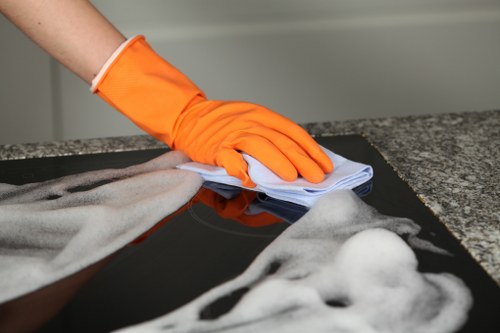 Health and safety is central to every cleaning task we carry out. This policy sets out how Cleaners Earls Court works to protect staff, clients, visitors, and anyone else who may be affected by our services. Our aim is to create a safe, controlled, and professional working environment where risks are identified early and managed properly.
All team members are expected to follow safe working practices at all times. This includes using cleaning products correctly, handling equipment with care, and reporting hazards without delay. We believe that good safety standards depend on consistent behaviour, clear communication, and a shared sense of responsibility.
Our approach is based on prevention. Rather than waiting for incidents to happen, we assess tasks in advance and choose safer methods wherever possible. Whether the work involves routine upkeep, deep cleaning, or specialist surface care, the same principle applies: protect people first, then complete the job efficiently.
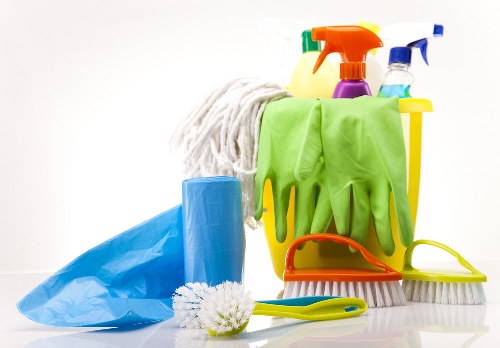 We recognise that cleaning work can involve slips, trips, manual handling, chemicals, electrical equipment, and contact with potentially contaminated materials. Because of this, cleaning health and safety is not treated as an add-on; it is part of the job from start to finish. Staff are trained to pause and reassess when conditions change, such as wet floors, cluttered spaces, poor lighting, or unexpected obstacles.
Risk assessment is a key part of our policy. Before beginning work, cleaners consider the area, the task, and the equipment required. If a hazard cannot be removed immediately, it must be controlled using practical measures such as signage, restricted access, safer scheduling, or alternative tools. This helps ensure that every cleaning service safety policy decision is grounded in real conditions rather than routine assumptions.
We also encourage a culture of alertness. Everyone is expected to notice unsafe conditions, such as damaged cables, unstable furniture, leaking containers, or broken fixtures. Prompt reporting allows issues to be addressed before they cause injury or disruption. A strong safety culture depends on small actions being taken seriously every day.
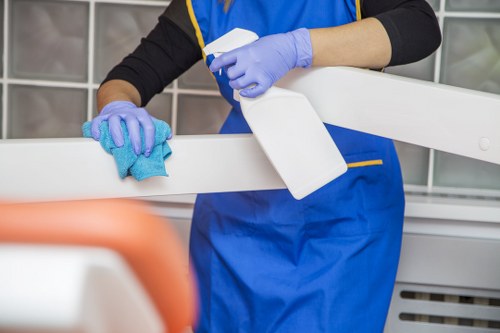 Personal protective equipment must be worn whenever required. Depending on the task, this may include gloves, masks, eye protection, aprons, or non-slip footwear. PPE is selected to suit the work being done, and it must be kept clean, stored properly, and replaced when no longer effective. Protective items are important, but they never replace safe technique.
Cleaning products must be used according to instructions and never mixed unless the product guidance clearly allows it. Staff should read labels carefully, store chemicals securely, and keep containers clearly marked. Ventilation should be maintained where possible, particularly when using stronger substances or working in enclosed areas. Safe handling protects both the user and the people nearby.
Equipment safety is equally important. Machines, vacuums, mops, and other tools should be inspected before use and taken out of service if damaged or faulty. Electrical items must be used in a dry, controlled way, with cables positioned to reduce tripping hazards. Safe cleaning operations depend on using the right tool for the task and not rushing the process.
Manual handling is another area of focus. Staff are trained to lift, carry, push, and pull with care, and to seek assistance when loads are awkward, heavy, or difficult to move. Wherever possible, tasks should be planned to reduce unnecessary strain. Using trolleys, dividing loads, and adjusting working height are all practical ways to lower the risk of injury.
Slips and trips are among the most common hazards in cleaning environments, so floor safety is taken seriously. Wet areas should be marked clearly, cleaning should be organised to reduce disruption, and surfaces should be left as safe as possible once the task is complete. Good housekeeping matters too: cords, waste, packaging, and unused tools should not be left in walkways.
When working near members of the public or occupied spaces, cleaners must remain considerate and alert. This means keeping noise to a minimum where possible, avoiding blocked exits, and respecting access routes. Good planning helps ensure that the service remains efficient without putting anyone at risk. Reliable cleaning standards and safe working standards should always go hand in hand.
 Every worker has a duty to follow this policy and to take reasonable care for their own safety and the safety of others. Supervisors are responsible for making sure procedures are understood, equipment is suitable, and any concerns are addressed promptly. Training is provided to support safe work habits, including correct product use, hazard awareness, emergency response, and incident reporting.
If an accident, near miss, spill, or exposure occurs, it must be reported immediately so that action can be taken and lessons can be learned. Incident reviews help improve future practice and reduce the chance of recurrence. We view these reviews as a practical tool for strengthening our procedures, not as a blame exercise.
Our health and safety policy is reviewed regularly to make sure it remains effective, relevant, and proportionate to the work being carried out. Updates may be made when tasks change, new equipment is introduced, or risks are identified through routine monitoring. This ongoing review helps maintain a dependable health and safety policy for cleaners across every cleaning assignment.
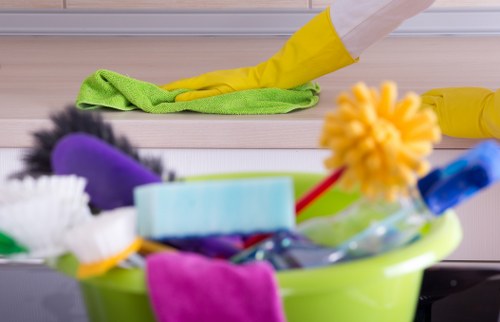 In practice, this policy reflects our commitment to safe, careful, and professional working methods. By planning ahead, using the correct equipment, and staying alert to hazards, Cleaners Earls Court aims to deliver a service that protects people as well as property. Safety is not a separate stage of the job; it is part of the standard we bring to every task.